


Distant Water Cannot Quench A Thirst

Updated: Sep 3
By Nicholas Banura Aine

EDITOR'S NOTE: We are thrilled to share our first guest blog post from Africa! More than 16 years ago, the New York Times News Service distributed my commentary, "The Daddying Movement – a Gentle Revolution," worldwide. If I was re-titling the piece today, I’d substitute: "An Inadvertent Evolution." Since coining the term daddying in a 1994 magazine piece, I continue to be heartened by the way Dads are seizing the opportunities that daddying provides. Many are experiencing the zenith of parenting: when nurturing your child is nourishing to you.
The Daddying Movement has now entered universal awareness. It has been optimized through social media, and fatherhood organizations of all sizes now proliferate throughout the world. Another indicator is that our Daddying Film Festival & Forum (D3F), now in its sixth year, has received submissions from 66 countries and counting. That’s more than a third of the nations worldwide!
We still have three months to go in this year's D3F call for entries, which runs through November 23 on FilmFreeway. So, if you're a student, Dad, Mom, dad figure, podcaster, or indie filmmaker, we invite you to share your own stories celebrating the importance of having or being an involved Dad by submitting a film or video for D3F 2027 consideration. And we hope Nicholas' story below inspires you and that you'll join us this January 29-30th at American University in Washington, DC, to see how others from around the globe tell theirs!
– Allan
* * *
I grew up believing that a man should carry his burdens in silence.
That's what I was taught. That's what I believed. And that belief nearly broke me.

In April of last year, I lost my job. The contracts that had been sustaining my family in Uganda dried up overnight. I have four daughters – Hope, Genesis, Jordanah, and Abidee. My eldest, Hope, is seven and has autism. In the rural town in Southwestern Uganda where we lived, autism is still widely misunderstood. I wanted to be her provider and protector. Instead, I found myself in the painful position of needing help myself.
For nearly four months, I sent out hundreds of job applications. I applied to anything I could find. I prayed. I waited, while bills piled up. And I carried it all alone.
Because that's what men do, right? We stay quiet. We keep going. We don't show weakness.
The Choice Between Good and Right
Then the job offer came; a chance to work in Nairobi, Kenya. It was the stability we desperately needed. But it meant leaving my family behind.
I told myself it was temporary. I was doing what was good. I was providing. I was building a future.
But here's what I've come to understand about daddying: it's not always a choice between good and bad, or right and wrong. Sometimes it's a choice between good and right. Creating stability is good. But is it really right to be away from your family to do it?
I was now in Nairobi, but my mind was always back home in Uganda. Every evening, I'd call. And every evening, I could hear it in my wife Jeanette's voice – a weariness that went deeper than sleep deprivation.
She was handling everything at home, alone. The four children. The school runs. The meals. The meltdowns. And on top of all that, the public stares and salty looks.
The Weight My Wife Carried Alone
Research shows that stigma is a profound experience for parents of children with autism. Studies have found that up to 75% of parents experience judgment and blame when their autistic child acts up in public. Parents report angry glances, whispered comments, and sometimes outright hostility. One mother described it as "pure judgment," explaining how strangers' stares make it harder to de-escalate a situation.
Jeanette never complained directly about such incidents, but I knew. When Hope would have a sensory overload or a tantrum in a public space – the market, the clinic, a gathering – people would look. Those looks said everything:
"Bad parenting." "Can't control her child." "What's wrong with that family?"
She was carrying the weight of the world's judgment, while I sat in my Nairobi apartment, grinding to put food on their table. I could hear it in her voice during our calls – a flatness, a tiredness that wasn't just physical. She was exhausted, and I wasn't there to share the load.
The Loneliness of an Empty Apartment
I lived alone in Nairobi. Every day, I'd wake up, look through the window of my small apartment before I dressed to go to work, and watch people like me in the street, some walking their kids to school.

In the evenings, the corridors and hallways of that apartment building were full of my neighbors' children pacing down corridors, laughing and playing in the stairwells. The sound would cut through me while I sat alone in my silent apartment. I'd close my eyes and imagine my own daughters. Hope running to me for a hug. Genesis giggling. Jordanah and Abide fighting over a toy.
"If only they were here," I'd think to myself.
Loneliness is a crushing companion for parents separated from their children; and yes, it happens to us men too. Long-distance parenting exacts hidden costs like missed birthdays, school events, and everyday moments that can never be recovered. The emotional disconnection happens quietly but rapidly, no matter how much love the distant parent feels.
I'd sit there, alone, and think, "These moments are passing. Hope is growing up. Her sisters too are maturing, and I'm not there to see it."
I was doing what was good. I was working, providing, paying home bills, and creating stability. But the parent in me was sad.

The Conversations that Broke My Heart
I made sure to call every evening. I'd wave at the screen, talk with Jeanette, and ask the kids about their day. But something was shifting. I could feel it even if I couldn't describe it.
At first, I didn't notice. Then the conversations started feeling wrong. They felt forced. My daughters weren't excited anymore. I'd ask, "How was school?" and get a one-word answer. "What did you eat today?" was met with silence, then, "I don't know."
I remember one call with Jeanette when I asked her, "Why do I feel like these kids are always sad?" She told me something our our daughter Genesis, who is usually so charming and playful, said. It stopped me cold.
"I don't have anything to say, Mummy, I just want to sleep."
I could see it, even through the screen. Their confidence was waning. The spark and the joy of childhood was dimming. It was like they were losing interest in being children.
I was doing what was good. I was working, providing, paying home bills, and creating stability. But the parent in me was sad.
International Research that was conducted on children separated from working parents confirms what I was seeing. Prolonged physical separation from a primary caregiver compromises a child's sense of security. Children with absent fathers often show lower self-esteem and confidence. Young children especially need frequent, predictable, face-to-face time. Without it, they can become anxious, clingy, or regress.
My daughters were not acting out, they were withdrawing. And I was the one who had left. Before I left, I was their playmate. I'd come home from work, and they'd jump on my back and tell me all the things they saw and did that day. "Daddy, I saw a bird!" "Daddy, look at my drawing!"
I'd sit there holding them and say, "Wow! That's nice!" Those were the moments that mattered. That's what daddying looked like in our home.
Over the phone, none of that worked. The conversation wasn't natural. It was sad and felt like duty. Those calls didn't bring us closer, they made the distance more painful. We ended every call with more longing than we started. Staying in touch wasn't keeping us together; it was just reminding us of how far apart we really were.
The Turning Point
I couldn't go on like this. I needed to bring them to Nairobi, whatever it cost. I remember the day I finally opened up to old school friends, like Alfred Niwagaba, who had just attended a Special Fathers Network event with DADvocacy Consulting Group's Allan Shedlin.

It wasn't easy. My voice cracked. I kind of felt ashamed of asking for help, but something unexpected happened. They didn't judge me, they told me they had been through similar struggles. Friends stepped in to help. And through conversations with Allan, who felt compelled to support me in reuniting with my family, I mustered the courage to act.
At that moment, I realized I wasn't alone.
With their encouragement and support, I got on a bus and went back to Uganda. I brought my family to Nairobi.
The Price of Presence

Was it easy? No. Nairobi is expensive. Schools cost more, housing is pricier, and healthcare isn't cheap, especially for Hope, who needs specialized attention.
"Distance-parenting" was worse.
I knew that if I didn't bring my family now, I'd lose something I could never get back: the moments of holding them when they cry, the bedtime stories, the laughter, the presence.
You can't recover lost time.
I Saw the Cost of Absence with My Own Eyes
My youngest daughter, Abide, was only 6 months old when I left for work in Nairobi. She was just learning to recognize faces, smile at familiar voices, and reach out her small hands towards people she trusted. When I said goodbye, she was still small enough to curl into the crook of my arm, her tiny fingers wrapping around my thumb.
Five months later, when I travelled back to Uganda to bring my family to Nairobi, I walked through the door with my arms wide open.
Abide looked at me like I was a stranger.
I knelt down, stretched out my hands, and called her name the way I used to. The soft, singsong way that always made her giggle. She froze. Her eyes darted to Jeanette, searching for reassurance. Then she turned away from me and buried her face in her mother's shoulder.
I tried again. I reached for her, gently, the way I'd reached for her a thousand times before. She screamed. It wasn't a tantrum, it was a cry of fear. She pushed against Jeanette's chest, trying to get further from me. When I finally managed to hold her, she went stiff in my arms. Her little body was rigid and her hands pushed against my chest.
She didn't want me because she didn't know me. I had left as her father and returned as a stranger.
Jeanette had tried to keep my memory alive. She'd show the kids photos of me all the time, say my name, and tell them I was coming back to walk them to school. But a photo is flat and a voice from a screen is hollow. Children don't memorize love from a distance, they absorb it through touch, smell, and the daily rhythms of being held, fed, rocked, and comforted.
In five months, I had become a ghost. And no matter how many photos of me Jeanette showed the kids, no matter how many times they saw me through their WhatsApp video, Abide couldn't recognize me when I was right in front of her. The moment my own daughter screamed at the sight of me like I was a stranger was when I understood what distance parenting really costs.
You can recover from financial strain. You can rebuild savings. You can find new jobs. But you cannot get back the months your child spent learning to live without you.
A Father's Presence Cannot Be Replaced
I have no regrets. Every financial strain I now endure while raising my family close to my workplace here in Nairobi, is worth it because I can come home from work and be there. I can request an afternoon off work, go pick my kid from school and walk them back home while they tell me about their day.
I can now sit with Hope during her autistic meltdowns instead of watching from a screen. I can hug Genesis, Jordanah, and Abide and tell them they are loved in person. I can see their confidence returning, slowly but surely.
In Swahili, we have a saying: Maji yaliyo mbali hayazimi kiu ya sasa. It means, distant water cannot quench a current thirst.
Long-distance parenting creates deep emotional gaps because children need their father's physical presence to soothe their troubles in the exact moment they happen.
I had already missed five months of Abide’s toddler years when she was learning to walk, talk, and trust. She didn't know me when I reunited with them. I won't lose another day of their childhood.
To any father reading this who is away from their children, I know your pain. I know your loneliness. I know your guilt. But if there's any way to close the distance, do it, even if it costs more. Even if it's harder. Because being there – truly being there – is what daddying is all about.
It's not about being perfect. It's about showing up.
Daddy on.
Daddying Film Festival & Forum (D3F)

The Daddying Film Festival & Forum (D3F) 2027 Call for Entries keeps rolling all summer long on FilmFreeway! Students (3rd grade-undergrad), Dads, Granddads, Moms, Grandmoms, dad figures, Parenting Podcasters, Musicians, and indie filmmakers can submit films, videos, and podcast episodes through November 23, 2026!
Students, Dads/dad figures, and Moms may submit for FREE by our Mockingbird deadline THIS MONDAY, September 7th.
Since 2022, we've received submissions from 60+ countries and we're excited to present another amazing collection of the best daddying stories submitted by students, Dads/dad figs, Moms, and indie filmmakers from around the world! Check the D3F website or our FilmFreeway page for more inspiration, submission details, and Atticus Award winning films from previous years!
SAVE THE DATES: The 6th annual, virtual Daddying Film Festival will take place on Eventive, January 11-20, 2027, and our LIVE Daddying Film Forum, at American University in Washington, DC, will screen select Atticus Award winners and finalists, January 29-30, 2027.
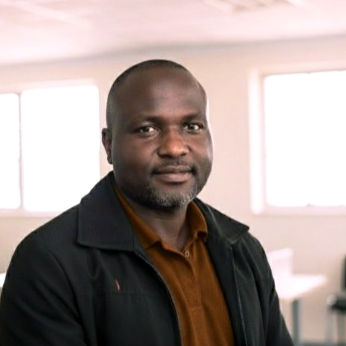
Nicholas Banura Aine is a father of four daughters, Hope, Genesis, Jordanah, and Abid. He currently works as a customer support and community engagement agent for remote technology companies and recently founded Support Scenarios, a customer support management consultancy. Originally from Kabale, Southwestern Uganda, he now lives in Nairobi, Kenya, a decision that was largely driven by the search for schools that understand Hope's autism and a community where the condition is less stigmatized. In Nairobi, where he is now rebuilding his family's life after a period of long-distance parenting that taught him the true cost of being away from his children, the community is more aware of developmental challenges like autism and less condescending toward neurodivergent personalities.
Nicholas is passionate about fatherhood, education and is grateful for the support of his old school friend Alfred Niwagaba, the Director of Little Angels Nursery and Primary School, Uganda, whose advocacy connected him with Allan Shedlin's DADvocacy Consulting Group at a critical moment.


Comments